
Ocean Alkalinity Enhancement
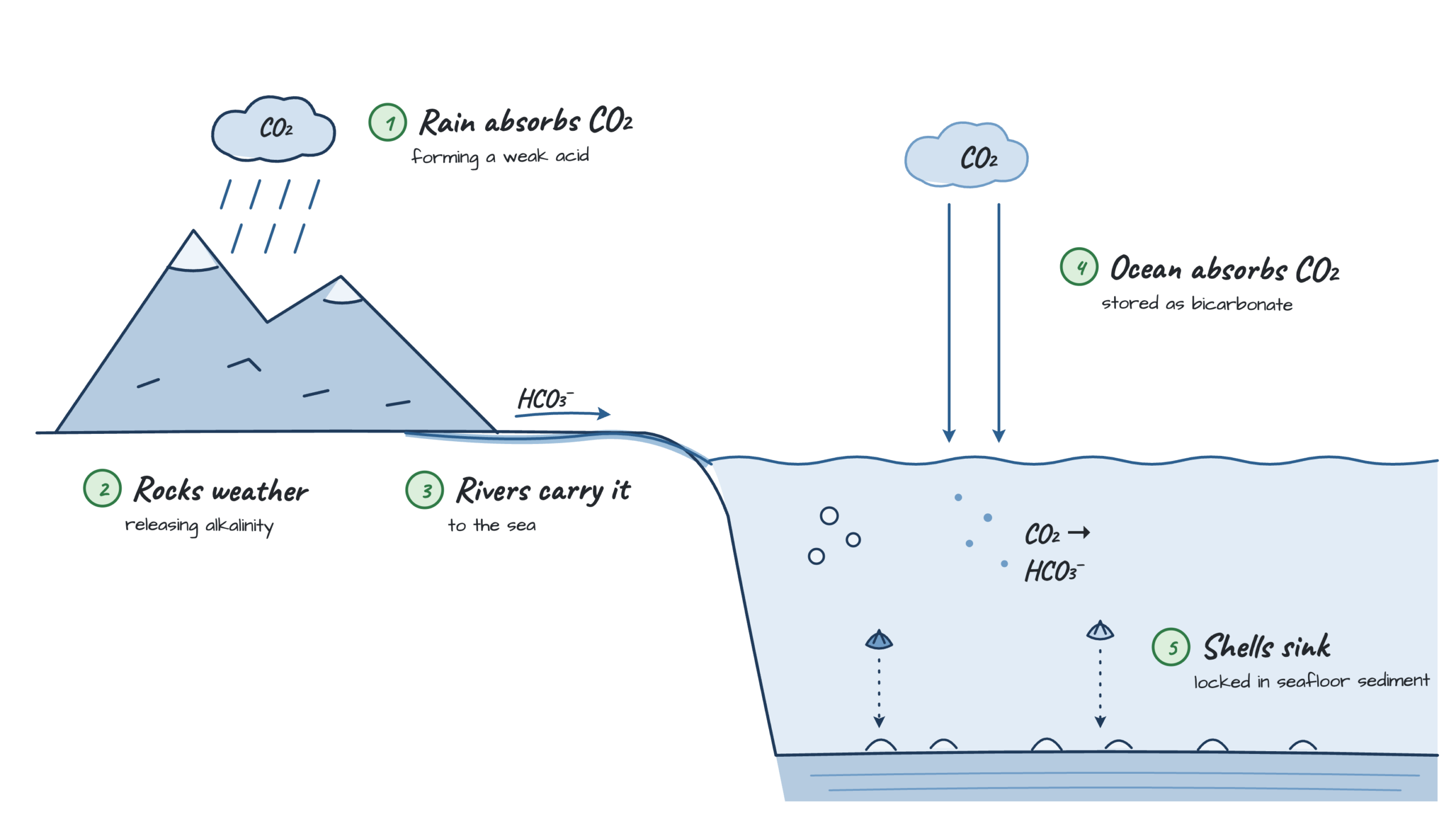
For millions of years, rain has absorbed carbon dioxide and slowly worn down rock. Rivers carry the released minerals to the sea, helping the ocean store carbon as bicarbonate for tens of thousands of years. Ocean alkalinity enhancement speeds up this natural process rather than replacing it.
What we do
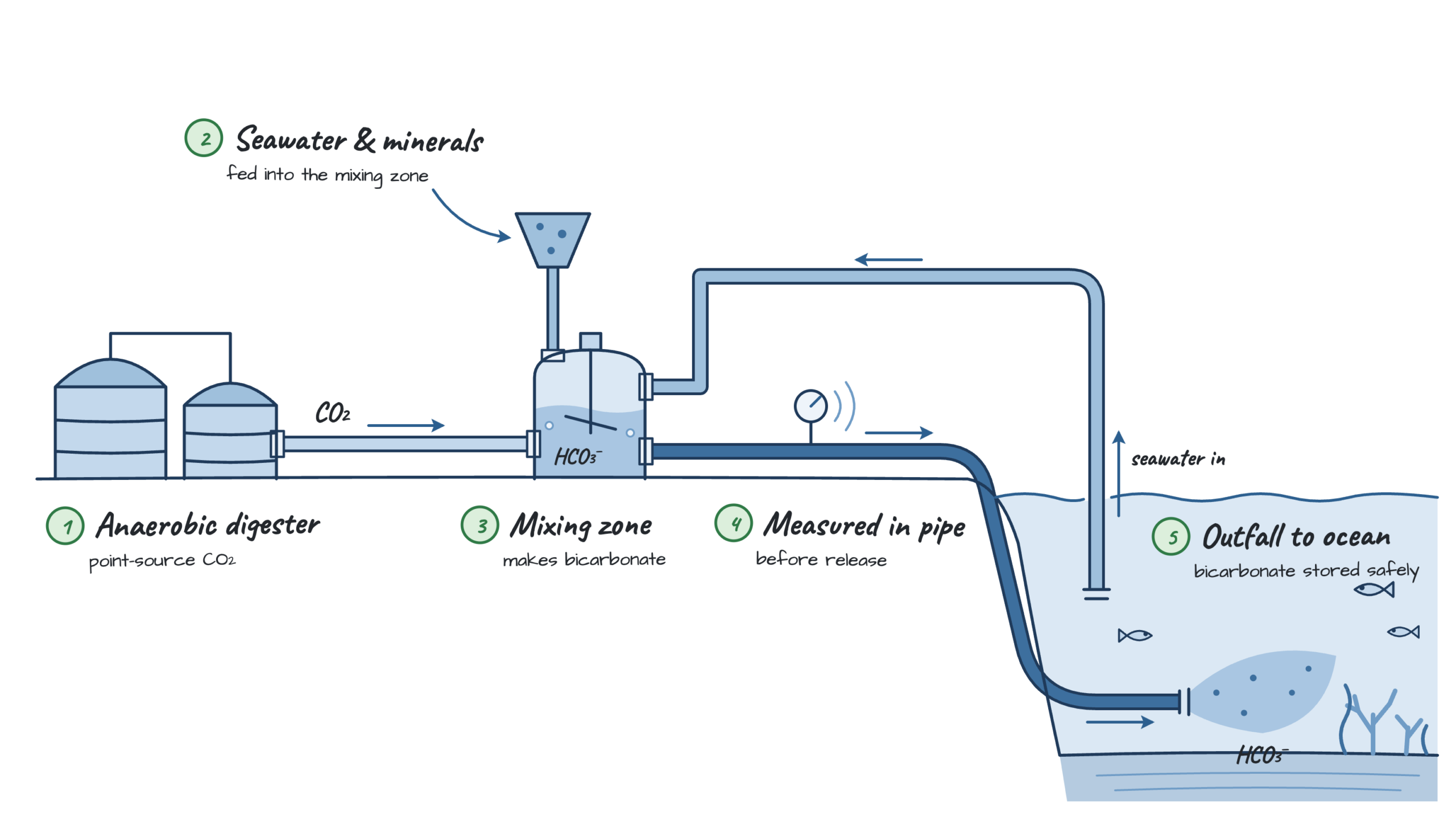
A compact unit that bolts onto an existing biogenic CO2 source
1. Capture
Biogenic CO2 is dissolved in water, forming carbonic acid.
2. dissolve
That water flows through a bed of crushed natural alkaline minerals, which the acid dissolves.
3. Measure
Every tCO2 is metered in the pipe and independently cross-checked by mass balance.
4. Store
The carbon returns to the ocean as dissolved bicarbonate, where it stays for tens of thousands of years.
Why it is different
Built to be cheap. Low-cost, off-the-shelf equipment and abundant minerals turn a CO2 waste stream into a resource, without the cost of purification, pressurisation, transport or storage infrastructure.
Goes where the emitter is. Isn’t dependent upon a CO2 pipeline or geological store, so a unit can sit at most biogenic CO2 sites. Initially we focus on suitable coastal sites, but this can be broadened over time.
Turns biogenic CO2 emitters into carbon removal engines. Small enough to sit at biogas, bioethanol and fermentation sites, a unit captures their biogenic CO2 and stores it in the ocean as bicarbonate.
Co-benefits: Nature and communities
Nature already does this. Rain and rivers carry limestone’s carbon to the sea as bicarbonate. We do it faster, under control.
We design backwards from the ecosystem. In contained aquaculture mesocosm ponds, we tune natural alkaline minerals, flow and pH for optimised benefits to marine life and livelihoods, measuring every effect against controls to learn before we scale.
Local shell waste can become our mineral source. We work with landowners, scientists, regulators and communities. Our biodiversity governance can change our design.
Limestone is ancient coral and shell, hence The Coral Exchange. One day we aim to put that alkalinity to work for living reefs.
Where we are now
To our knowledge, we are the first in the Global South to work with biogenic point-source CO2 for ocean-based weathering of alkaline minerals (source: Ocean Visions, mCDR Knowledge Platform).
Our bench experiment is running at technology readiness level 3, measuring dissolution rates, alkalinity gain, pH stability and CO2 off-gassing. Our field trial is set for early 2027. We are looking for pilot sites and partners: emitters venting biogenic CO2, coastal hosts, ocean scientists and early funders of carbon removal.
Our Team
Shane Hughes
CEO & Co-Founder
Experienced at solving complex sustainability challenges. He’s led a 20-strong carbon consultancy team, sat on an SBTi expert advisory board, coordinated GHG governance at Ramboll, and managed millions of tonnes of EU ETS compliance at CEMEX in a hard-to-abate sector.
He’s led a UN Global Compact peer learning program operationalising the Land Sector and Removals Protocol for 30 corporates, consulted on Olympic carbon neutrality strategy, and lead-verified GHG inventories for Coca-Cola, McDonald’s Europe, National Grid and Google Ireland.
He’s proudest of producing an event in the Brazilian Amazon with Greenpeace.
Kazem Beaton
COO & Co-Founder
Aside from a period as Head of Experience & Growth at a 100+ person business, Kazem has spent most of his career in the charity and not-for-profit sector — leading stakeholder engagement, fundraising and leading strategic teams at organisations including Macmillan Cancer Support, Prostate Cancer UK, The Children’s Society and Freedom from Torture.
He shapes partnership strategy at scale, that deliver measurable impacts and serves a greater purpose.
He draws inspiration from family, food, travel, and the ocean.
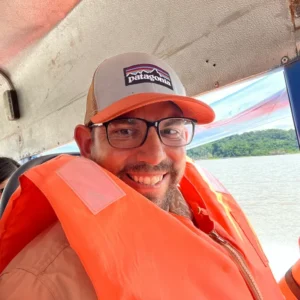
Paul Parker
MRV Lead
Paul is an MRV Lead with senior-level experience in MRV, GHG verification, and renewable energy engineering. He previously served as Global Carbon Lead at TÜV Rheinland, a leading international verification body, where he developed and delivered carbon services spanning GHG accounting, decarbonisation, and life cycle assessment (LCA) across multiple industry sectors.
He has also contributed to the TIC (Testing, Inspection and Certification) Council’s sustainability committee, with a focus on carbon removals. As Technical Director at HP Projects, he led the development of low-head hydropower sites on the River Thames, including securing both public and private equity funding.
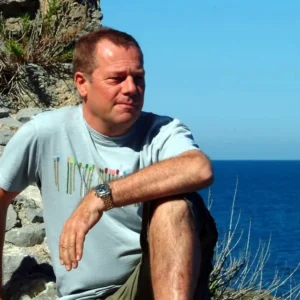
Shane L Hughes
Commercial Lead
A specialist in identifying and delivering successful business programmes, designing target operating models, and engaging senior stakeholders to realise benefits. He brings a 360° commercial view, sharp judgement, and a track record of innovation across automation, ERP and machine learning working with business transformations for household names including DHL, Barclaycard, Barclays, Santander, Costa Coffee, Whitbread, Volkswagen, Daimler Chrysler, Mitie, Parcelforce, Cable & Wireless, Andersen Consulting and Homebase.
Samantha Deacon
Biodiversity Lead
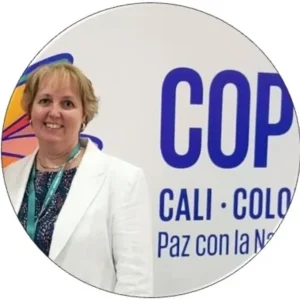
Sam has more than 25 years’ experience spanning environmental consulting, regulation and research. As Ramboll’s Global Lead for Biodiversity & Ecosystems, she delivered a four-year nature strategy, expanded the team from 240 to 330, and oversaw $20m in annual net revenue, earning recognition as a ‘World Class Expert’ and Thought Leader for Nature.
Her expertise covers marine, freshwater and terrestrial ecosystems, pollution risk and restoration, product safety and stewardship, and natural capital analysis. Through The Nature Imperative, which she founded, she now advises organisations on nature-positive outcomes and strategy, is a certified SBTN trainer and international speaker.
Our Values

Restoration
We leave a coast better than we found it.
A healthy, living coast feeds people, supports jobs and helps keep the climate steady. We work to repair these ecosystems, not just protect them: rebuilding habitats, helping wildlife return, and leaving the coast richer than we found it. Restoration is not what we sell — it is the condition on which we work somewhere, and half of what we measure.
Nature
We work with nature, not against it.
We solve problems the way nature already does, running a reaction the planet has run for hundreds of millions of years rather than inventing a substitute for it. Healthy coasts already clean water, store carbon and shelter life, and the closer we stay to how they naturally work, the longer our impact lasts.

Integrity
We say what we know, and we’re honest about what we don’t.
Real trust comes from claims that hold up when people check them. So we measure carefully, we only say what we can back up, and we never make our impact sound bigger than it is. That includes publishing results that go against us.

Community
We build around the people and places already on the coast.
Rather than turning up with a finished plan, we give new life to abandoned spaces and add value to ways of working that local communities have built over generations. If the people who host us don’t truly benefit, there’s no reason for us to be there.
Resilience
We build things that last.
We don’t rely on a single product or a single source of income. By spreading our work across many products and benefits, we help the communities and coasts we work with stay strong as the climate changes — because resilience is what turns a good idea into something that endures.